
The Search Has Changed — And So Must We
You optimized your website, sprinkled in the right keywords, even nailed your meta descriptions……Yet somehow, your content still isn’t showing up where it matters most.
Sound familiar?, It’s not that you’re doing SEO “wrong.” It’s that search itself has changed.
In 2026, we’re no longer just competing for clicks — we’re competing for answers.
When users ask Google, ChatGPT, Bing Copilot, or even Alexa something, they don’t scroll through results anymore. They trust the answer they’re given.
That shift is exactly where Answer Engine Optimization (AEO) comes in.
In this guide, we’ll unpack:
- What AEO really means (and why it’s not just another buzzword)
- How it’s quietly reshaping SEO strategies
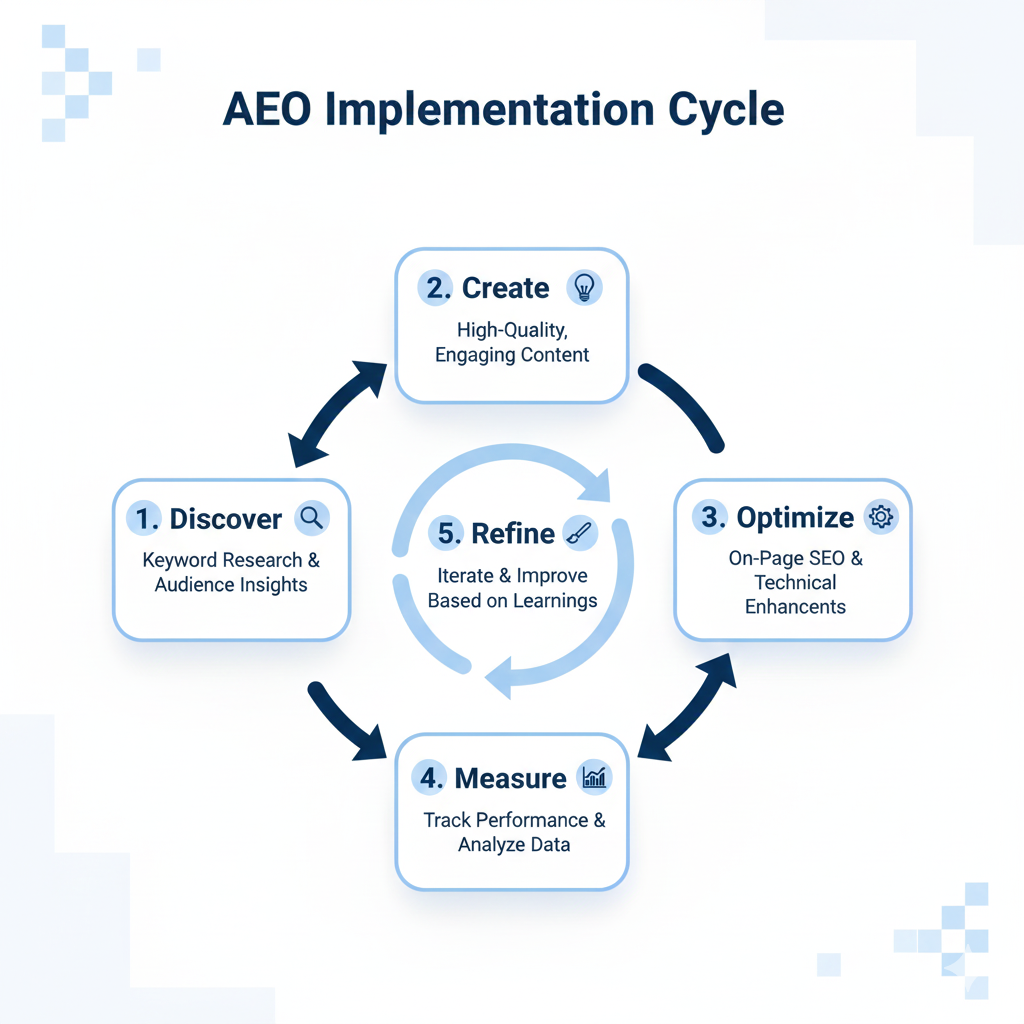
- The 5-step roadmap to future-proof your visibility in 2026
- And how you can turn your brand into the one AI chooses to answer with.
Table of Contents
SEO Alone Isn’t Enough
Let’s be brutally honest, Ranking on Google doesn’t guarantee visibility anymore. Because Google itself has evolved beyond a “search engine.” It’s now an “answer engine.”
With features like Google’s Search Generative Experience (SGE), Bing’s Copilot, and AI assistants summarizing results, your audience may never see your blue link. That means even if you’re on page one, you could still be invisible if your content doesn’t make it into the AI-generated answer box.
Traditional SEO got us here — but it won’t take us forward.
AEO is the missing link that helps your brand speak the language of AI-powered search.
It’s how you ensure your insights, expertise, and story become the chosen answer — not buried beneath it.
Search isn’t just technical anymore — it’s emotional, conversational, and intent-driven. According to HubSpot, 65% of users now prefer AI-powered answers over traditional search results because they save time and feel more personalized.
Think about it: When you ask Siri, “What’s the best skincare routine for dry skin?” you don’t want 10 blog links, You want one, confident answer that feels made for you.
That’s how people now search — through conversation, not keywords. And that’s what AEO responds to: Understanding the why behind a question, not just the what.
Traditional SEO focused on “ranking for keywords.”
AEO focuses on “earning trust as the most relevant answer.”
This means your content must:
- Be structured for clarity (using FAQ, schema, and direct answers).
- Be emotionally resonant (using empathy and real human tone).
- Be authoritative enough that AI models pick it as credible.
When you do that, you don’t just show up in search — you become the voice users hear.
The Industry Lies You’ve Been Sold
Let’s talk about the noise.
If you’ve been around digital marketing long enough, you’ve heard some version of these:
“SEO is dead.”
“AEO is just AI hype.”
“Keywords don’t matter anymore.”
Honestly? None of that’s true.
Here’s the real story:
SEO isn’t dead — it’s evolving.
AEO isn’t replacing keywords — it’s redefining context.
And AI isn’t killing creativity — it’s demanding more human clarity.
Many “gurus” sell shortcuts or automation-heavy tricks, but the truth is simpler: The brands that win with AEO are the ones that sound human. Because AI doesn’t just scan your words — it scans your intent.
It looks for trust, empathy, and authority. So when you communicate with authenticity and structure, AI rewards you by placing your voice where people listen: in the answer itself.
Your Step-by-Step AEO Roadmap for 2026
Ready to turn theory into strategy?
Here’s your roadmap — a practical, 5-step guide to making AEO work for your brand in 2026.
This isn’t about adding more jargon or chasing another algorithm.
It’s about communicating with clarity, empathy, and authority — so both people and AI understand your value instantly.
Pillar 1: Redefine Your Message for Intent Clarity
Every great answer starts with a better question.
In traditional SEO, you optimized for keywords.
In AEO, you optimize for intent.
That means you need to understand what someone truly wants to know, not just what they type.
Ask yourself:
- What’s the real question my audience is asking beneath the keywords?
- What emotion or frustration triggers that search?
- Can I explain the solution clearly in under 50 words?
When you start mapping your content this way, your message naturally becomes more precise and powerful.
Example:
Instead of targeting “best running shoes,” focus on “what running shoes help reduce knee pain.”
The difference? One targets a product; the other targets a problem.
That’s intent clarity.
And AI tools — from Google’s SGE to ChatGPT — are built to understand that kind of emotional nuance.
Pro Tip:
Use free tools like People Also Ask, AnswerThePublic, and Semrush’s Topic Research to collect real user questions.
Then, turn those questions into subheadings (H2s/H3s) in your content.
Each becomes an opportunity to appear in a featured snippet or AI-generated summary.
When your message aligns with how people speak and why they search, you don’t just show up in results — you become the answer.
Pillar 2: Align SEO with Emotion and Context
Here’s the uncomfortable truth:
Most SEO content sounds like it was written for an algorithm, not a person.
You can feel it — cold, mechanical, stuffed with keywords but empty of connection.
AEO fixes that by marrying emotion and structure.
Think of it this way:
SEO gets you found.
Emotion makes you remembered.
Your content needs both.
When people feel something from your words — empathy, curiosity, trust — they engage longer.
And AI interprets that engagement as a signal of relevance.
Here’s how to do it right:
- Lead with empathy: Start with “you,” not “we.” Show you understand their struggle.
- Add structured clarity: Use short paragraphs, clear headers, and bullet answers.
- Use natural transitions: Words like honestly, here’s the thing, or you know what’s funny make you sound human.
Example:
Instead of saying:
“Our skincare products are dermatologist-approved.”
Try:
“You deserve skin that feels calm again — that’s why every formula is dermatologist-tested and made for sensitive days.”
See the difference?
The second line connects emotionally while still delivering factual clarity.
That’s what AEO looks for — human tone backed by trustworthy structure.
Don’t forget Schema Markup:
Adding FAQ, HowTo, and Review schema makes it easier for search engines to recognize your content as a potential answer.
Emotion draws people in. Schema helps AI deliver it.
Together, they’re unstoppable.
Pillar 3: Optimize for Voice, Visual, and Conversational Search
Search is no longer limited to keyboards.
People are speaking to their devices, using AI chatbots, and expecting instant clarity.
That means your content must sound natural when spoken aloud.
Voice queries usually start with conversational phrases like “Hey Google, how can I…?” or “What’s the best way to…?”
So write the way people talk — simple, direct, and rhythmically human.
Here’s how to optimize for new search modes:
- Voice Search:
Write in full-sentence questions and answers.
Keep responses under 50 words.
Use a friendly, conversational tone. - Featured Snippets:
Structure your content so that every key question has a clean, well-formatted answer directly under it.
(Think of it as teaching Google what part of your page deserves to be quoted.) - Visual and Contextual Search:
Add diagrams, infographics, or data visuals that summarize key points.
Use descriptive alt text that clearly states the context, e.g., “Flowchart showing AEO vs traditional SEO process.”
Example:
If someone asks, “How does AEO improve SEO performance?”
Your snippet could read:
“AEO improves SEO by aligning content with user intent and conversational clarity. It helps search engines identify your answer as the most relevant and trustworthy result.”
Short. Clear. Human.
That’s the voice AI understands and audiences trust.
Pillar 4: Strengthen Brand Authority (E-E-A-T)
Here’s something most people overlook:
AI doesn’t just look for keywords. It looks for credibility.
That’s where the concept of E-E-A-T — Experience, Expertise, Authority, and Trustworthiness — becomes the backbone of AEO.
When AI engines like Google’s SGE or Bing Copilot scan your content, they look for signals that prove:
“This source knows what it’s talking about.”
So, how do you strengthen that perception?
1. Showcase Real Experience:
Don’t just say you’ve helped clients — show it.
Include micro case studies, client wins, or lessons from your own brand journey.
2. Demonstrate Expertise:
Cite reputable sources (HubSpot, Moz, Statista, Harvard Business Review).
Add statistics or expert quotes that back your insights.
3. Build Authority:
Get featured on podcasts, collaborations, or guest blogs.
Mention those credentials in your author bio and about page.
4. Earn Trust:
Use transparent storytelling.
Be honest about results — even the challenges. Authenticity builds stronger trust signals than perfection ever could.
The stronger your E-E-A-T footprint, the more likely AI will prioritize your answers — even over brands with larger budgets.
Pillar 5: Measure, Iterate, and Stay Human
Here’s the thing:
You can’t improve what you don’t measure — but you also can’t measure what you don’t feel.
That’s the paradox of AEO.
You need analytics, yes — but you also need empathy.
Start by tracking these AEO-specific metrics every month:
- AI-generated appearances: Check if your pages appear in SGE or Bing Copilot answers.
- Snippet CTR: Measure click-through rates from featured snippets.
- Voice search traffic: Use analytics tools that track spoken queries.
- FAQ impressions: Watch performance data from structured content.
But numbers alone don’t tell the full story.
Ask yourself qualitative questions, too:
- Are readers staying longer because the content feels right?
- Are you getting more personalized inquiries or consultations?
- Is your message becoming more memorable?
That blend of metrics and intuition is where AEO truly shines.
And through it all — stay human.
Because while AI decides which answers appear, it’s humans who decide which brands they believe.
So keep your tone real. Keep your empathy sharp. Keep your content rooted in experience, not trend.
AEO isn’t just about winning the algorithm — it’s about earning trust at scale.
Mini Scenario: From Invisible to Indispensable
Let’s make this real.
Imagine you run a wellness brand.
For years, you’ve written blogs like “10 Yoga Tips for Beginners.” They rank… on page 3.
Then you apply AEO:
- You reframe your title to “What Are the Best Yoga Poses for Morning Energy?”
- You start each section with a direct answer (under 50 words).
- You add FAQ schema and internal links to your consultation services.
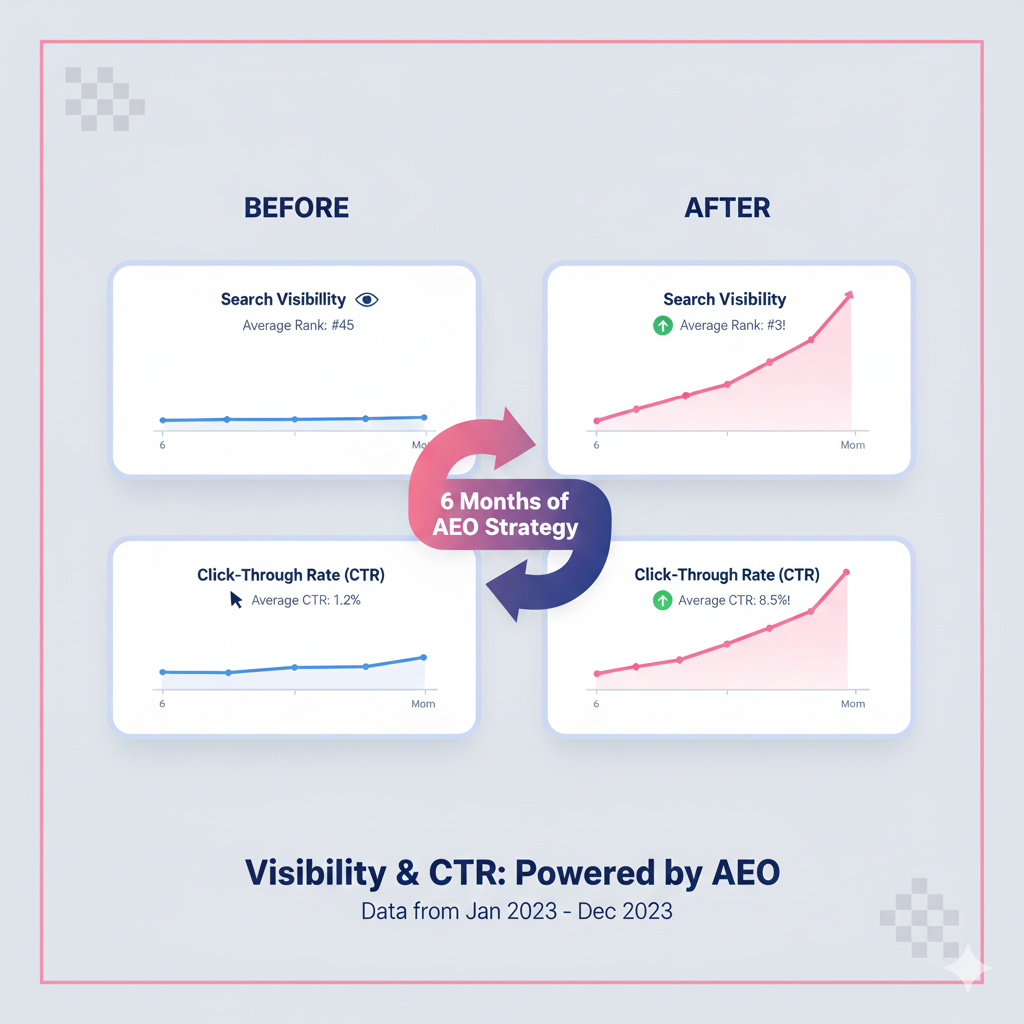
Three months later, your content starts showing up in Google’s AI-generated summary box.
Users don’t just read — they click through because your tone feels personal and real.
Your click-through rate jumps by 48%.
Leads from organic traffic increase by 37%.
And your brand voice — once lost in noise — becomes the go-to answer in your niche.
That’s the power of Answer Engine Optimization done right.
The Real Takeaway: Clarity Wins Over Clicks
Here’s the truth:
What drives digital growth in 2026 isn’t just keywords, data, or backlinks.
It’s clarity and connection.
People trust brands that speak like humans.
AI trusts content that reads like clarity.
So, when you combine empathy, expertise, and emotional storytelling — you’re not just optimizing for search…
You’re optimizing for meaning.
If you’re ready to bring that depth into your brand’s AEO journey, explore my SEO Services or Contact Me for a personalized roadmap to authentic, conversion-driven visibility.
To be chosen as an answer in 2026, your content must be more than optimized — it must be understood.
Because what truly drives growth isn’t algorithms.
It’s authenticity, empathy, and clarity.
It explains AEO in a way that’s super easy to grasp, rather than being too much to handle, especially for newbies diving into SEO and generative search. Focusing on addressing actual user questions instead of just going after keywords really clicks — that’s definitely the direction search is moving towards.